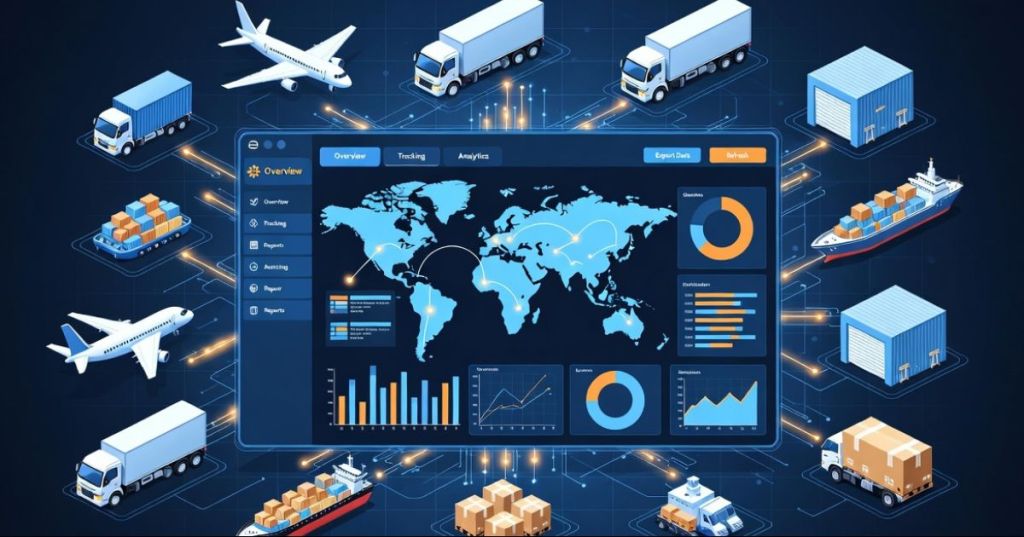
The logistics industry is evolving rapidly as businesses increasingly depend on digital solutions to manage transportation, inventory, and supply chain operations. From real-time tracking to automated route planning, technology has become the backbone of modern logistics. Companies that want to stay competitive must invest in smart and scalable software solutions that improve efficiency and reduce operational costs.
This is where a professional logistics development company plays a crucial role. A reliable development partner helps businesses build custom logistics platforms that simplify operations, improve communication, and enhance decision-making. However, not every logistic development company delivers the same level of expertise or innovation. Choosing the right development partner requires understanding the key features and capabilities they should offer.
In this blog, we will explore the top features to expect from a professional logistics development company and how these features help businesses streamline supply chain management, improve customer experience, and achieve long-term operational success.
Deep Industry Knowledge and Logistics Expertise
One of the most important features to expect from a professional logistics software development company is strong industry knowledge. Logistics is a complex sector that involves multiple processes such as shipment tracking, fleet management, warehouse operations, inventory control, and route optimization. A development team that understands these processes can design software that truly meets the needs of logistics businesses.
A skilled logistic software development company should have experience working with transportation providers, warehouse operators, freight forwarding companies, and supply chain management organizations. Their understanding of logistics workflows enables them to build systems that support real-world operational requirements rather than generic software solutions.
Industry knowledge also allows developers to integrate technologies that address logistics challenges such as delayed shipments, inefficient route planning, lack of transparency, and poor coordination between teams. By partnering with an experienced logistics app development company, businesses can create solutions that solve these issues effectively.
Furthermore, experienced developers often stay updated with logistics trends such as automation, digital freight management, predictive analytics, and AI-powered supply chain optimization. This expertise ensures that the software remains relevant and adaptable in an ever-changing industry environment.
Custom Logistics App Development for Business-Specific Needs
Every logistics company operates differently depending on its size, service offerings, and supply chain structure. Therefore, a one-size-fits-all software solution rarely works effectively. A professional logistics software development company should provide custom logistics app development tailored to the unique needs of each business.
Custom software allows logistics companies to build applications that align with their operational processes. Whether the requirement is fleet tracking, warehouse management, delivery scheduling, or shipment monitoring, tailored applications ensure that businesses get exactly the features they need.
A reliable logistic app development company begins the development process by analyzing the company’s workflows and identifying inefficiencies. Based on this analysis, the development team designs customized solutions that improve productivity and streamline operations.
Another advantage of custom logistics app development is scalability. As logistics businesses grow, they need software that can adapt to increasing shipment volumes, expanding fleets, and additional warehouse locations. Custom-built solutions make it easier to add new features and integrate additional technologies without disrupting existing operations.
By working with a trusted logistic development company, organizations can develop powerful logistics platforms that match their business goals and operational requirements.
Real-Time Shipment Tracking and Visibility
Real-time tracking has become a standard expectation in modern logistics operations. Customers and businesses both want complete visibility into shipment movements, delivery status, and transportation routes. A professional logistics software development company should provide advanced tracking capabilities that allow companies to monitor their logistics operations in real time.
Through GPS integration, IoT sensors, and mobile connectivity, logistics software can provide accurate updates about shipment locations and estimated delivery times. These tracking systems improve transparency and help logistics teams respond quickly to unexpected delays or disruptions.
A well-developed solution from a logistics app development company enables businesses to track vehicles, drivers, and shipments through a centralized dashboard. This improves operational coordination and ensures that managers have complete control over transportation activities.
Real-time visibility also enhances customer experience. Customers can track their shipments through mobile applications or web portals, which increases trust and satisfaction. Many businesses now rely on logistic software development services to implement advanced tracking features that keep both customers and internal teams informed at every stage of delivery.
Integration with Existing Business Systems
Logistics operations involve multiple systems such as inventory management, warehouse management, order processing, accounting, and enterprise resource planning. A professional logistic software development company should ensure that logistics platforms integrate smoothly with existing business systems.
System integration eliminates data silos and allows information to flow seamlessly across departments. For example, when an order is placed in an e-commerce system, the logistics platform should automatically receive the shipment details and initiate delivery processes.
A reliable logistics software development company develops solutions that connect with ERP platforms, CRM tools, payment gateways, and third-party APIs. This integration ensures that logistics teams can manage operations from a unified interface rather than switching between multiple systems.
Integration also improves data accuracy and reduces manual errors. When logistics data is synchronized across platforms, businesses gain better insights into inventory levels, shipment progress, and operational performance.
Companies seeking efficient digital transformation often rely on logistic software development services that focus on seamless system connectivity and automation.
Advanced Route Optimization and Fleet Management
Transportation is one of the most critical and costly aspects of logistics operations. Inefficient route planning can lead to increased fuel consumption, delayed deliveries, and higher operational expenses. A professional logistics app development company should provide advanced route optimization features that help businesses improve transportation efficiency.
Route optimization software uses algorithms, traffic data, and geographic analysis to determine the fastest and most cost-effective delivery routes. This technology ensures that drivers reach destinations quickly while minimizing travel distance and fuel usage.
A reliable logistic app development company also integrates fleet management tools that allow businesses to monitor vehicle performance, maintenance schedules, and driver activities. These tools help logistics companies maintain operational efficiency and ensure vehicle safety.
Fleet management systems developed through custom logistics app development often include features such as driver performance tracking, fuel consumption monitoring, and automated alerts for maintenance requirements.
By working with an experienced logistic development company, logistics businesses can reduce operational costs and improve delivery performance through intelligent route planning and fleet management solutions.
Scalable and Secure Software Architecture
As logistics companies grow, their technology infrastructure must support increasing workloads and expanding operations. A professional logistics software development company should build software solutions with scalable architecture that can handle growing shipment volumes and expanding logistics networks.
Scalability ensures that businesses can add new users, vehicles, warehouses, and customers without experiencing system performance issues. Cloud-based infrastructure is commonly used in modern logistic software development services because it allows companies to scale resources according to operational needs.
Security is another critical aspect of logistics software development. Logistics platforms often handle sensitive data such as shipment details, customer information, payment records, and operational analytics. A reliable logistic software development company implements advanced security measures to protect this data.
These security measures may include data encryption, secure authentication systems, role-based access control, and regular security audits. A trustworthy logistics app development company ensures that software platforms comply with industry security standards and regulations.
Data Analytics and Reporting Capabilities
Data-driven decision making has become essential for modern logistics management. A professional logistic development company should offer advanced data analytics and reporting tools that help businesses monitor performance and identify improvement opportunities.
Logistics software equipped with analytics features can generate insights about delivery times, route efficiency, inventory movement, driver performance, and operational costs. These insights help logistics managers optimize processes and make informed decisions.
A reliable logistics software development company integrates dashboards and reporting systems that provide real-time performance metrics. Managers can analyze key indicators such as shipment delays, transportation costs, and warehouse productivity.
Through custom logistics app development, businesses can also implement predictive analytics that forecasts demand patterns, shipment volumes, and potential disruptions in supply chain operations. These predictive capabilities help companies prepare for future challenges and maintain operational stability.
Organizations that leverage logistic software development services with strong analytics capabilities gain a significant advantage in managing complex logistics networks.
Mobile Accessibility and Driver Applications
Mobility is an essential requirement for logistics operations because drivers, warehouse staff, and delivery teams often work in remote or field environments. A professional logistics app development company should develop mobile-friendly platforms that allow teams to access logistics information from anywhere.
Mobile applications enable drivers to receive delivery instructions, update shipment status, capture delivery confirmations, and communicate with dispatch teams. These applications improve coordination between field teams and central operations.
A reliable logistic app development company ensures that mobile apps are user-friendly, fast, and compatible with multiple devices. These apps are often integrated with GPS tracking systems, digital proof of delivery features, and real-time messaging capabilities.
Through custom logistics app development, businesses can create mobile solutions that match their operational workflows and improve driver productivity.
Automation and Workflow Optimization
Automation is transforming the logistics industry by reducing manual tasks and improving operational efficiency. A professional logistic development company should implement automation features that streamline logistics workflows and reduce administrative workload.
Automated logistics software can manage tasks such as shipment scheduling, invoice generation, delivery notifications, and inventory updates. This automation reduces human errors and allows logistics teams to focus on strategic activities rather than repetitive tasks.
A skilled logistics software development company uses modern technologies such as artificial intelligence, machine learning, and robotic process automation to create intelligent logistics platforms.
For example, AI-powered systems can predict delivery delays, recommend optimal routes, and analyze shipment patterns to improve supply chain performance. Businesses investing in logistic software development services with automation capabilities can significantly enhance operational efficiency.
Ongoing Support and Maintenance Services
Software development does not end with product deployment. Logistics platforms require continuous monitoring, updates, and improvements to remain effective and secure. A professional logistics software development company should provide ongoing support and maintenance services.
Regular maintenance ensures that the software remains compatible with new technologies, operating systems, and industry standards. It also helps businesses fix technical issues quickly and maintain system stability.
A reliable logistic software development company offers services such as performance monitoring, bug fixing, system upgrades, and feature enhancements. These services ensure that logistics platforms continue to deliver optimal performance over time.
Businesses partnering with a dependable logistics app development company benefit from long-term technical support that keeps their digital infrastructure strong and reliable.
User-Friendly Interface and Seamless Experience
No matter how advanced a logistics platform is, its effectiveness depends largely on how easily users can interact with it. A professional logistics software development company should focus on creating user-friendly interfaces that simplify complex logistics operations.
Logistics software should allow managers, drivers, warehouse staff, and customers to navigate features easily without requiring extensive training. Clear dashboards, intuitive controls, and simplified workflows improve user experience and increase productivity.
A reliable logistic app development company conducts usability testing and gathers user feedback during the development process. This ensures that the final product delivers a seamless and efficient user experience.
Through thoughtful design and custom logistics app development, businesses can create platforms that empower employees to perform their tasks efficiently while improving operational transparency.
Final Thoughts
The logistics industry is becoming increasingly technology-driven, and businesses must adopt advanced digital solutions to remain competitive. Choosing the right logistics software development company is a crucial step in building powerful logistics platforms that improve efficiency, transparency, and operational control.
A professional logistic development company should offer a combination of industry expertise, custom logistics app development, real-time tracking, system integration, advanced analytics, and strong security measures. These features ensure that logistics software supports both current operational needs and future business growth.
By investing in reliable logistic software development services, organizations can streamline supply chain operations, reduce costs, and deliver better customer experiences. Partnering with an experienced logistics app development company ultimately enables businesses to transform their logistics infrastructure into a modern, scalable, and efficient digital ecosystem.
As logistics networks continue to expand and customer expectations rise, the role of technology will only become more important. Businesses that collaborate with a trusted logistic software development company will be better equipped to navigate industry challenges and build a smarter, more responsive logistics operation for the future.
 Software Services
Leave a comment