Key Takeaways
- Smart pregnancy apps are transforming maternal healthcare experiences in the UAE.
- AI-powered healthcare solutions improve pregnancy monitoring and patient engagement.
- Digital pregnancy platforms support remote healthcare accessibility and telemedicine.
- UAE healthcare digitalization is increasing demand for personalized maternity apps.
- Security, compliance, and data privacy are critical in healthcare app development.
- Advanced features like AI insights, wearable integration, and virtual consultations are becoming essential.
- Healthcare startups are investing heavily in scalable women-focused healthcare platforms.
- Choosing the right technology partner significantly impacts healthcare app success.
The healthcare industry in the UAE is rapidly transforming through digital innovation, and pregnancy care is becoming one of the biggest beneficiaries of this shift. Modern women no longer rely only on traditional clinic visits and paper-based medical tracking. Instead, they are turning toward intelligent mobile platforms that provide real-time healthcare support, personalized pregnancy guidance, virtual consultations, AI-powered monitoring, and wellness tracking from anywhere.
This is where smart pregnancy apps UAE are changing the future of maternal healthcare.
From prenatal health tracking and appointment scheduling to AI-driven risk alerts and nutrition monitoring, digital pregnancy solutions are helping women experience safer, smarter, and more connected healthcare journeys. As the UAE continues investing in smart hospitals, telemedicine, and patient-centric healthcare systems, pregnancy applications are becoming a critical part of the country’s digital healthcare ecosystem.
Today, startups, healthcare providers, hospitals, and entrepreneurs are increasingly investing in pregnancy app development UAE to meet the growing demand for personalized maternity care solutions. These platforms are not only improving healthcare accessibility but are also supporting the broader vision of digital transformation across the UAE healthcare sector.
In this blog, we will explore how smart pregnancy apps are revolutionizing women’s healthcare in the UAE, the technologies behind these applications, must-have features, development costs, AI innovations, compliance requirements, and why businesses are investing heavily in this growing market.
What Are Smart Pregnancy Apps?
Smart pregnancy apps are next-generation digital healthcare solutions designed to help women manage their pregnancy journey with greater convenience, accuracy, and personalized medical support. Unlike traditional pregnancy tracking applications that only provide basic calendars or baby growth updates, modern smart pregnancy platforms use advanced technologies such as Artificial Intelligence (AI), cloud computing, real-time analytics, wearable integrations, and telemedicine services to create a more connected healthcare experience.
These intelligent applications act as virtual pregnancy companions that support women from early pregnancy planning to postnatal care. They provide real-time health insights, personalized wellness recommendations, appointment reminders, emotional support, and direct communication with healthcare professionals — all through a single mobile platform.
Today, advanced smart pregnancy apps UAE are transforming how women access maternal healthcare by making healthcare services more accessible, data-driven, and patient-centric. These platforms are especially important in fast-growing digital healthcare ecosystems like the UAE, where users expect smart, secure, and highly personalized healthcare experiences.
Modern women’s healthcare apps UAE commonly include features such as:
- Pregnancy week-by-week tracking
- AI-powered health and risk assessments
- Personalized nutrition and hydration guidance
- Fetal growth and development monitoring
- Medication and vitamin reminders
- Virtual doctor consultations and telemedicine support
- Mental wellness and stress management tools
- Emergency healthcare assistance
- Integration with smartwatches and wearable devices
- Secure digital medical record management
Many advanced AI pregnancy apps UAE also use predictive analytics to identify potential health risks early, helping healthcare providers deliver proactive maternal care. This improves both patient safety and healthcare efficiency.
As the demand for digital pregnancy healthcare UAE continues to grow, smart pregnancy applications are becoming an essential part of the modern healthcare ecosystem. They not only improve patient engagement and accessibility but also help hospitals, clinics, and healthcare startups deliver more personalized and technology-driven maternity care solutions.
Why Smart Pregnancy Apps Are Growing Rapidly in the UAE
The UAE is rapidly emerging as one of the most advanced digital healthcare markets in the Middle East. With strong government support, smart city initiatives, rising healthcare investments, and growing adoption of AI-powered medical technologies, the country is creating a highly innovation-driven healthcare ecosystem. As a result, the demand for smart pregnancy apps UAE is increasing significantly among hospitals, healthcare startups, clinics, and modern consumers.
Today’s users expect healthcare services to be fast, accessible, personalized, and digitally connected. Traditional pregnancy care models that rely only on in-person consultations are no longer enough for modern patients. Women now prefer healthcare solutions that provide real-time support, remote access to doctors, personalized health insights, and continuous pregnancy monitoring directly from their smartphones.
This shift is driving the rapid growth of digital pregnancy healthcare UAE platforms across the region.
Several important factors are contributing to the growing popularity of smart pregnancy applications in the UAE.
Increasing Smartphone and Internet Penetration
The UAE has one of the world’s highest smartphone penetration rates, making mobile healthcare services easily accessible to a large population. Women across different age groups are becoming increasingly comfortable using digital platforms for healthcare management, appointment scheduling, wellness tracking, and virtual consultations.
This strong digital infrastructure creates the perfect environment for the growth of women’s healthcare apps UAE and mobile-first healthcare experiences.
Additionally, high-speed internet connectivity and widespread adoption of smart devices are enabling healthcare providers to offer more advanced app-based healthcare services without major accessibility barriers.
Rising Demand for Personalized Healthcare Experiences
Modern healthcare consumers expect highly personalized experiences rather than generic healthcare advice. Smart pregnancy applications powered by AI and analytics can deliver customized recommendations based on:
- Pregnancy stage
- Medical history
- Lifestyle habits
- Nutritional needs
- Sleep patterns
- Health conditions
- Physical activity levels
This level of personalization improves patient engagement and allows women to receive more relevant healthcare support throughout their pregnancy journey.
As AI technologies continue evolving, AI pregnancy apps UAE are becoming more intelligent in providing predictive insights, wellness recommendations, and proactive healthcare alerts tailored to individual users.
Rapid Growth of Telemedicine and Virtual Healthcare
Telemedicine has transformed the healthcare industry in the UAE. Patients increasingly prefer remote healthcare services for convenience, accessibility, and faster medical support.
Modern smart pregnancy apps now integrate telehealth functionalities such as:
- Video consultations
- Virtual prenatal checkups
- In-app doctor messaging
- Online prescription management
- Digital health assessments
These features reduce the need for frequent hospital visits while improving healthcare accessibility for pregnant women.
The rise of telemedicine is also encouraging healthcare startups and businesses to invest heavily in pregnancy app development UAE solutions that combine virtual healthcare services with AI-powered patient engagement.
Strong Focus on Preventive and Proactive Healthcare
The UAE healthcare sector is shifting from reactive treatment models toward preventive and proactive healthcare systems. Healthcare providers are increasingly focusing on early detection, continuous monitoring, and personalized wellness management.
Smart pregnancy apps play a major role in this transformation by enabling:
- Early symptom tracking
- Pregnancy risk identification
- Health monitoring
- Medication reminders
- Nutrition management
- Lifestyle improvement recommendations
Advanced analytics and AI-driven monitoring systems help healthcare professionals identify potential complications earlier, improving both maternal and fetal health outcomes.
This preventive healthcare approach is one of the biggest reasons behind the growing adoption of digital pregnancy healthcare UAE solutions.
Government Support for Digital Healthcare Innovation
The UAE government is heavily investing in healthcare digitalization, AI integration, and smart healthcare ecosystems as part of its long-term national development strategies.
Initiatives connected to Digital Healthcare Goals in UAE are encouraging hospitals, startups, and healthcare technology providers to adopt innovative digital healthcare solutions that improve patient experiences and healthcare efficiency.
This includes investments in:
- AI-powered healthcare systems
- Smart hospitals
- Electronic medical records
- Telemedicine infrastructure
- Mobile healthcare platforms
- Data-driven patient care systems
These national digital transformation efforts are creating major opportunities for businesses developing advanced smart pregnancy apps UAE and intelligent maternal healthcare platforms.
Growing Awareness of Women’s Digital Health Solutions
Women in the UAE are becoming increasingly health-conscious and digitally connected. There is growing awareness around maternal wellness, prenatal care, mental health support, and pregnancy monitoring.
Modern pregnancy applications are helping women take greater control of their healthcare journey by offering:
- Real-time pregnancy education
- Personalized healthcare insights
- Mental wellness resources
- Community support features
- Daily health tracking tools
This growing demand for convenient and intelligent healthcare experiences is accelerating the popularity of women’s healthcare apps UAE among modern users.
Increasing Investment in Healthcare Startups and Innovation
The UAE startup ecosystem is experiencing rapid growth in healthcare technology investments. Investors and entrepreneurs are recognizing the strong market demand for AI-powered healthcare platforms and women-focused digital health solutions.
As a result, many healthcare businesses are collaborating with experienced Healthcare App Development Company in Dubai providers and skilled app developers in UAE to build scalable and compliant maternal healthcare applications.
This innovation-driven ecosystem is helping accelerate the development of smarter, more secure, and more advanced pregnancy healthcare solutions across the region.
How AI Is Transforming Pregnancy Healthcare Apps
Artificial Intelligence is becoming one of the most powerful technologies revolutionizing modern maternal healthcare. Traditional pregnancy applications were once limited to simple tools like due date calculators and baby growth tracking. However, modern AI pregnancy apps UAE are far more advanced and intelligent. They now offer real-time healthcare support, predictive monitoring, personalized wellness guidance, and smart automation that improves both patient experiences and healthcare outcomes.
As digital healthcare adoption continues growing across the UAE, AI-powered pregnancy applications are helping healthcare providers deliver more connected, proactive, and patient-centric maternity care solutions. These intelligent systems are transforming how women monitor their pregnancy journey, communicate with healthcare professionals, and manage their overall wellness.
Personalized Pregnancy Insights and Recommendations
One of the biggest ways AI is transforming pregnancy healthcare apps is through personalized healthcare experiences. Every woman’s pregnancy journey is different, and AI technology helps applications provide customized recommendations instead of generic advice.
AI systems analyze various types of user data, including medical history, pregnancy stage, sleep quality, nutrition habits, physical activity, stress levels, and symptom patterns. Based on this information, the app generates tailored healthcare suggestions that match the user’s individual needs.
For example, if a pregnant woman is not maintaining proper hydration or nutritional balance, the application may recommend healthier meal plans, hydration reminders, and vitamin schedules. Similarly, if the system detects high stress levels or poor sleep quality, it can suggest meditation exercises, relaxation activities, or wellness tips to improve emotional health.
Some common AI-powered personalized features include:
- Customized meal and nutrition guidance
- Pregnancy-safe workout suggestions
- Daily wellness recommendations
- Sleep improvement advice
- Emotional wellness support
- Personalized pregnancy risk alerts
This personalized healthcare approach improves patient engagement and helps women feel more connected to their healthcare journey. It is also one of the key reasons why smart pregnancy apps UAE are becoming increasingly popular among modern healthcare users.
Predictive Health Monitoring and Early Risk Detection
AI is also transforming pregnancy healthcare through predictive health monitoring. Traditional healthcare systems usually depend on periodic hospital visits and manual health observations. In contrast, AI-powered systems can continuously monitor health data in real time and identify potential complications much earlier.
Advanced machine learning algorithms analyze patient behavior, wearable device data, medical records, and symptom patterns to detect abnormal health trends. These intelligent systems can help identify risks related to:
- High blood pressure
- Gestational diabetes
- Sleep irregularities
- Stress-related complications
- Unusual fetal movement patterns
- Heart rate fluctuations
- Nutritional deficiencies
By detecting warning signs at an early stage, healthcare providers can take preventive actions before conditions become severe. This proactive healthcare approach significantly improves maternal safety and reduces emergency healthcare situations.
For healthcare businesses investing in pregnancy app development UAE, predictive analytics has become one of the most valuable AI features because it improves both patient outcomes and healthcare efficiency.
AI Chatbots and Virtual Healthcare Assistants
Modern women’s healthcare apps UAE are increasingly integrating AI-powered chatbots and virtual healthcare assistants to improve communication and healthcare accessibility.
These conversational AI systems use Natural Language Processing (NLP) to understand user questions and provide instant responses related to pregnancy healthcare. Instead of waiting for doctor appointments to address small concerns, users can receive immediate support directly through the app.
AI virtual assistants can help users with topics such as:
- Pregnancy symptoms
- Baby development information
- Medication reminders
- Prenatal care guidance
- Nutrition advice
- Exercise recommendations
- Mental wellness support
- Emergency healthcare instructions
This 24/7 healthcare assistance improves patient engagement and makes healthcare support more accessible. AI chatbots also help reduce the workload on hospitals and healthcare providers by handling basic patient queries automatically.
As telemedicine adoption continues increasing across the UAE, AI-powered communication systems are becoming an essential feature in digital pregnancy healthcare UAE platforms.
Smart Reminder Systems and Intelligent Automation
Pregnancy care involves managing multiple daily healthcare activities, including doctor appointments, supplements, hydration tracking, medications, exercise routines, and wellness monitoring. AI-powered automation systems help simplify this process through intelligent reminders and personalized scheduling.
Unlike traditional reminder systems, AI-driven healthcare automation adapts based on user behavior and health patterns. The application learns user habits and sends reminders at the most effective times to improve healthcare consistency.
For example, if a user regularly misses hydration goals during certain hours of the day, the app can automatically adjust reminder timings to encourage better habits. Similarly, medication reminders can become more personalized based on the user’s healthcare routine and pregnancy stage.
Smart automation commonly helps users manage:
- Prenatal appointment schedules
- Medication and supplement reminders
- Hydration tracking
- Daily wellness activities
- Exercise schedules
- Sleep monitoring
- Health checkup notifications
This intelligent automation improves healthcare management while helping users maintain healthier pregnancy routines.
Wearable Device Integration and Real-Time Monitoring
Wearable healthcare technology is becoming an important part of modern AI pregnancy apps UAE. Many advanced pregnancy applications can now connect with wearable devices such as smartwatches, fitness bands, sleep trackers, and heart rate monitors.
These integrations allow healthcare applications to collect continuous real-time health data from users. AI systems then analyze this information to generate personalized healthcare insights and alerts.
Real-time monitoring can help track:
- Physical activity levels
- Heart rate changes
- Sleep quality
- Stress indicators
- Daily movement patterns
- Overall wellness trends
If the system detects unusual activity or abnormal health behavior, it can notify the user or healthcare provider immediately. This connected healthcare ecosystem improves preventive care and enables more proactive maternal healthcare management.
Wearable integration is becoming increasingly important for businesses collaborating with a Healthcare App Development Company in Dubai because modern users expect smarter and more connected healthcare experiences.
AI-Powered Mental Wellness and Emotional Support
Pregnancy affects both physical and emotional health. Many women experience stress, anxiety, hormonal changes, and emotional fatigue during pregnancy. AI-powered pregnancy healthcare apps are now addressing mental wellness as an important part of maternal healthcare.
Advanced AI systems can analyze behavioral patterns, sleep habits, mood changes, and app interactions to identify emotional health concerns early. Based on these insights, the application can recommend personalized wellness activities and emotional support resources.
These may include:
- Guided meditation sessions
- Stress management exercises
- Relaxation techniques
- Mental wellness check-ins
- Emotional health tracking
- Motivational healthcare content
This holistic healthcare approach is helping smart pregnancy apps UAE become more patient-focused and comprehensive.
AI Analytics for Healthcare Providers
Artificial Intelligence is not only improving patient experiences but also helping healthcare providers make better medical decisions. AI-powered analytics systems allow doctors and hospitals to monitor patient progress remotely and analyze healthcare trends more efficiently.
Healthcare providers can use AI dashboards to:
- Identify high-risk pregnancies earlier
- Monitor patient health remotely
- Improve treatment planning
- Analyze patient behavior patterns
- Reduce administrative workload
- Enhance patient engagement strategies
This data-driven healthcare model improves operational efficiency and enables more proactive patient care.
Many healthcare startups and enterprises are now partnering with experienced healthcare app development company in UAE providers to build AI-enabled healthcare ecosystems that support long-term digital healthcare growth.
The Future of AI in Pregnancy Healthcare Apps
The future of AI-powered maternal healthcare is expected to become even more advanced as healthcare technologies continue evolving. Emerging innovations such as predictive diagnostics, voice-enabled healthcare assistants, IoT-connected maternal monitoring systems, and real-time emergency detection will further transform the healthcare experience for pregnant women.
The UAE’s strong focus on healthcare digitalization and Digital Healthcare Goals in UAE is accelerating the adoption of intelligent healthcare systems across the region. This is creating major opportunities for healthcare startups, clinics, and hospitals to invest in advanced pregnancy app development UAE solutions that deliver smarter, safer, and more personalized maternal healthcare experiences.
As AI technology becomes more sophisticated, pregnancy healthcare apps will continue reshaping the future of women’s healthcare apps UAE by making healthcare more accessible, predictive, efficient, and patient-centric.
Must-Have Features in Smart Pregnancy Apps
Building a successful pregnancy healthcare application requires much more than basic tracking functionality. Modern users expect intelligent, secure, and highly personalized healthcare experiences that can support them throughout every stage of pregnancy. Today’s smart pregnancy apps UAE combine AI-powered healthcare systems, telemedicine, wellness tracking, and secure digital infrastructure to create a complete maternal healthcare ecosystem.
For healthcare startups and businesses investing in pregnancy app development UAE, selecting the right features plays a major role in improving patient engagement, healthcare efficiency, and long-term app success.
Below are some of the most important features every modern pregnancy healthcare app should include.
Pregnancy Week Tracker
A pregnancy week tracker is one of the core features of every pregnancy healthcare application. This feature helps users monitor their pregnancy journey week by week while providing detailed information about fetal growth and body changes.
Modern pregnancy tracking systems do much more than basic calendar updates. Advanced applications provide personalized weekly insights related to:
- Baby development stages
- Physical body changes
- Nutritional requirements
- Health precautions
- Emotional wellness guidance
- Exercise recommendations
- Medical checkup reminders
This feature helps users stay informed and emotionally connected throughout their pregnancy journey while improving healthcare awareness and patient engagement.
AI-Powered Health Monitoring
Artificial Intelligence is becoming one of the most valuable features in modern AI pregnancy apps UAE. AI-powered monitoring systems analyze health data, symptoms, lifestyle habits, wearable device inputs, and medical history to generate personalized healthcare recommendations.
These intelligent systems help users better manage their pregnancy by providing:
- Personalized wellness suggestions
- Pregnancy risk assessments
- Sleep quality analysis
- Stress monitoring
- Nutrition guidance
- Symptom tracking
- Predictive health alerts
AI-driven healthcare monitoring also enables healthcare providers to identify potential risks earlier and improve preventive healthcare support.
As digital healthcare adoption continues increasing, AI integration is becoming essential for businesses planning to create advanced women’s healthcare apps UAE.
Telemedicine Integration
Telemedicine has become a major part of modern healthcare systems in the UAE. Smart pregnancy applications now allow users to connect directly with healthcare professionals through virtual consultations.
Telemedicine features commonly include:
- Video consultations
- In-app doctor messaging
- Online appointment booking
- Digital prescriptions
- Virtual prenatal checkups
- Remote healthcare monitoring
This functionality improves healthcare accessibility by reducing the need for frequent physical hospital visits. It is especially beneficial for users living in busy urban environments or remote locations.
The growing demand for telehealth services is one of the main reasons why digital pregnancy healthcare UAE solutions are rapidly expanding.
Digital Health Record Management
Healthcare data management is another essential feature in modern pregnancy healthcare applications. Digital health record systems allow users to securely store and access important medical information anytime.
This may include:
- Ultrasound reports
- Lab test results
- Prescription history
- Doctor recommendations
- Vaccination records
- Pregnancy progress reports
Centralized digital records improve healthcare continuity and make it easier for doctors to access accurate patient information during consultations.
For businesses working with a Healthcare App Development Company in Dubai, secure healthcare data management is often one of the most important development priorities.
Nutrition and Fitness Tracking
Proper nutrition and physical wellness are extremely important during pregnancy. Modern pregnancy healthcare applications help users maintain healthier lifestyles through personalized wellness tracking systems.
These features typically provide:
- Meal planning guidance
- Hydration tracking
- Calorie monitoring
- Pregnancy-safe workout plans
- Weight management tracking
- Nutritional recommendations
AI-powered wellness systems can also customize recommendations based on the user’s pregnancy stage, medical conditions, and daily activity levels.
This improves patient engagement while encouraging healthier pregnancy habits.
Wearable Device Connectivity
Wearable healthcare technology is transforming modern smart pregnancy apps UAE by enabling real-time health tracking and continuous patient monitoring.
Pregnancy applications can integrate with devices such as:
- Smartwatches
- Fitness bands
- Heart rate monitors
- Sleep tracking devices
- Smart health sensors
These integrations allow apps to collect live healthcare data related to sleep patterns, physical activity, heart rate changes, stress levels, and wellness trends.
AI systems then analyze this information to generate real-time insights and health alerts. This creates a more proactive healthcare experience and improves preventive care management.
Emergency Assistance Features
Maternal healthcare applications should also include emergency assistance functionality to improve patient safety during critical situations.
Emergency healthcare features may include:
- One-tap emergency calling
- Instant healthcare alerts
- Emergency contact sharing
- Hospital locator systems
- Real-time health notifications
Quick access to emergency healthcare support can significantly improve maternal safety and reduce healthcare response times during complications.
Multi-Language Support
The UAE has a highly diverse population with users from different cultural and linguistic backgrounds. Modern women’s healthcare apps UAE should therefore provide multi-language support to improve accessibility and user engagement.
Supporting multiple languages helps healthcare applications reach a wider audience while improving patient comfort and communication.
This feature is especially important for healthcare businesses targeting large-scale UAE healthcare markets.
Secure Data Protection and Privacy
Healthcare applications manage highly sensitive patient information, making data security one of the most critical aspects of pregnancy app development.
Modern healthcare apps must implement strong security systems such as:
- End-to-end data encryption
- Multi-factor authentication
- Secure cloud storage
- Role-based access controls
- Secure API integrations
- Patient privacy protection systems
Strong cybersecurity infrastructure helps healthcare organizations maintain user trust while complying with healthcare regulations.
Businesses planning to Develop a Pregnancy App Like Mylo should prioritize security, AI integration, scalability, and user experience to remain competitive in the growing digital healthcare market.
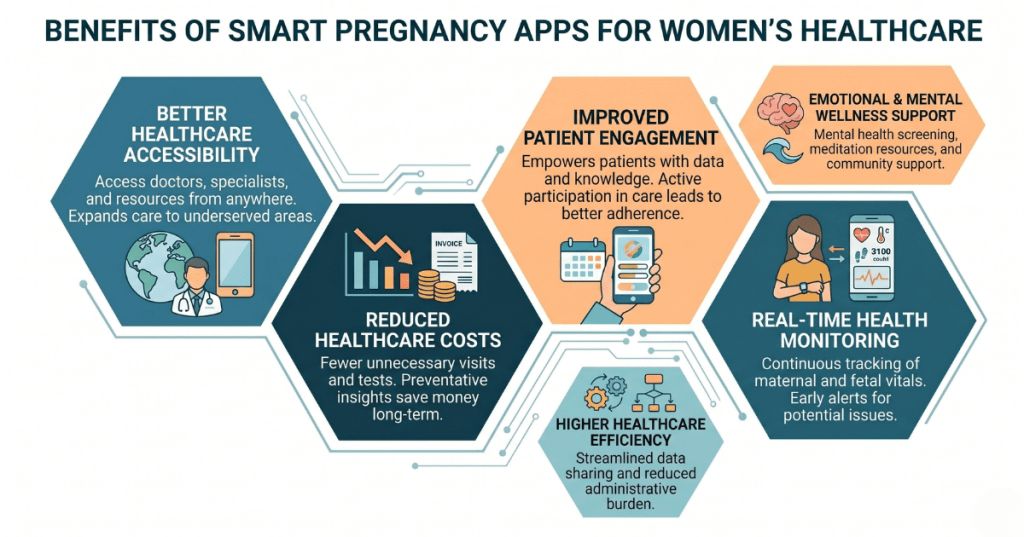
Benefits of Smart Pregnancy Apps for Women’s Healthcare
The rapid growth of smart pregnancy apps UAE is significantly improving women’s healthcare experiences by making healthcare more accessible, personalized, and technology-driven.
These applications are not only helping pregnant women manage their health more effectively but are also supporting healthcare providers through improved patient engagement and digital healthcare management.
Better Healthcare Accessibility
One of the biggest advantages of smart pregnancy applications is improved healthcare accessibility. Women can now access healthcare guidance, wellness support, and medical information anytime directly through their smartphones.
Instead of relying only on physical clinic visits, users can receive healthcare assistance remotely through telemedicine and AI-powered healthcare systems.
This digital accessibility is especially important in modern healthcare ecosystems where convenience and fast healthcare access are becoming essential.
Improved Patient Engagement
Interactive healthcare experiences encourage users to remain more involved in their healthcare journey. Features such as AI recommendations, wellness tracking, appointment reminders, and personalized healthcare content improve long-term patient engagement.
Higher patient engagement often leads to:
- Better healthcare awareness
- Improved wellness habits
- Higher treatment compliance
- Increased app retention rates
This is one reason why healthcare startups are increasingly investing in advanced AI pregnancy apps UAE.
Reduced Healthcare Costs
Digital healthcare solutions help reduce unnecessary hospital visits and administrative costs through remote healthcare services and preventive monitoring systems.
Telemedicine consultations and AI-powered healthcare tracking allow healthcare providers to deliver more efficient patient care while minimizing operational costs.
Real-Time Health Monitoring
Continuous healthcare monitoring allows users and healthcare professionals to respond faster to potential health risks.
Wearable integrations and AI-powered analytics provide real-time healthcare insights that improve maternal safety and preventive healthcare management.
Emotional and Mental Wellness Support
Pregnancy healthcare is not limited to physical wellness. Modern applications now provide emotional support tools such as stress management guidance, mental wellness tracking, meditation content, and emotional healthcare resources.
This holistic healthcare approach is improving the quality of digital pregnancy healthcare UAE services.
Higher Healthcare Efficiency
Healthcare providers can manage patient records, consultations, analytics, and communication more efficiently through centralized digital healthcare systems.
This improves healthcare workflows while enabling more personalized patient care experiences.
UAE Compliance Requirements for Pregnancy Healthcare Apps
Healthcare applications in the UAE must comply with strict healthcare regulations, security standards, and patient privacy laws. Compliance is essential because healthcare apps handle sensitive medical information and telemedicine services.
For businesses investing in pregnancy app development UAE, regulatory compliance is one of the most important development considerations.
Data Security Compliance
Healthcare apps must implement advanced security systems to protect patient information from unauthorized access and cyber threats.
Important security requirements often include:
- End-to-end encryption
- Secure cloud infrastructure
- Multi-factor authentication
- Role-based access management
- Secure healthcare APIs
Strong security infrastructure improves patient trust while ensuring regulatory compliance.
Patient Privacy Protection
Protecting sensitive healthcare data is critical for all healthcare applications. Pregnancy healthcare platforms must follow strict privacy policies related to patient information storage, sharing, and access management.
Healthcare providers and startups must ensure that patient data remains confidential and protected at all times.
Telemedicine Regulations
Virtual healthcare services must comply with UAE telemedicine standards and healthcare regulations. Telemedicine functionality should follow approved medical practices while ensuring secure doctor-patient communication systems.
As telehealth adoption continues growing, compliance in this area is becoming increasingly important for digital pregnancy healthcare UAE platforms.
Healthcare Data Hosting Requirements
In certain situations, healthcare applications may need to comply with regional data hosting requirements depending on healthcare regulations and patient data management policies.
This is why many healthcare businesses prefer working with an experienced Healthcare App Development Company in Dubai that understands local healthcare compliance requirements and digital healthcare regulations.
Technology Stack Used in Pregnancy App Development
Building a modern pregnancy healthcare application requires a strong, scalable, and secure technology foundation. Since these apps handle sensitive medical data, real-time monitoring, AI-based predictions, and telemedicine features, the technology stack must be carefully chosen to ensure performance, compliance, and long-term reliability.
In today’s pregnancy app development UAE ecosystem, developers focus on building systems that are not only fast and user-friendly but also capable of handling complex healthcare workflows, large datasets, and AI-driven analytics.
Frontend Technologies
The frontend is the part of the application that users directly interact with. In pregnancy apps, the user experience must be simple, calming, and highly intuitive because users may access the app daily throughout their pregnancy journey.
Technologies like Flutter and React Native are widely used because they allow developers to build cross-platform applications for both Android and iOS using a single codebase. This reduces development time and ensures consistent user experience across devices.
Native technologies like Swift (for iOS) and Kotlin (for Android) are also used when high performance and deep device integration are required, especially for advanced features like wearable connectivity or real-time health tracking.
A strong frontend ensures that users can easily navigate features such as pregnancy tracking, AI insights, telemedicine consultations, and health monitoring dashboards without confusion or technical difficulty.
Backend Technologies (Core System & Logic)
The backend acts as the brain of the application. It handles data processing, user authentication, server communication, AI integration, and healthcare data management.
In smart pregnancy apps UAE, backend systems must be highly secure and scalable because they manage sensitive medical records and real-time patient information.
Technologies like Node.js and Python are widely used because they support fast processing and are highly compatible with AI and machine learning systems. Python, in particular, is preferred for healthcare applications due to its strong ecosystem for AI, data analysis, and predictive modeling.
Frameworks like Laravel and .NET are also used for building secure and structured enterprise-level healthcare systems. These technologies help ensure that the application can handle large numbers of users while maintaining stability and performance.
A well-designed backend ensures seamless integration between AI systems, telemedicine modules, wearable devices, and healthcare databases.
AI & Analytics Technologies (Intelligence Layer)
Artificial Intelligence is the most transformative part of modern AI pregnancy apps UAE. This layer enables apps to move beyond simple tracking and become intelligent healthcare assistants.
Machine learning models are used to analyze patient data such as symptoms, activity levels, sleep patterns, nutrition habits, and medical history. These models help generate predictive insights that can detect potential health risks early.
TensorFlow is commonly used for building and training machine learning models, while OpenAI APIs and similar technologies are used to power conversational AI assistants and chatbots.
Predictive analytics systems help healthcare providers and users understand trends in pregnancy health, such as identifying early signs of complications or suggesting personalized wellness plans.
This intelligence layer is what makes modern digital pregnancy healthcare UAE solutions significantly more advanced than traditional healthcare applications.
Cloud Infrastructure (Scalability & Security Layer)
Cloud infrastructure plays a critical role in ensuring that pregnancy healthcare apps are secure, scalable, and always available.
Platforms like AWS, Microsoft Azure, and Google Cloud provide the necessary infrastructure to store healthcare data securely, manage high traffic loads, and support real-time application performance.
In healthcare applications, cloud systems also enable secure data backups, disaster recovery, and compliance with healthcare regulations. Since pregnancy apps deal with sensitive patient information, cloud security becomes one of the most important aspects of the entire system.
Cloud technology also allows healthcare providers to scale their applications easily as user demand grows, especially in rapidly expanding markets like the UAE.
Database Systems (Data Management Layer)
Database systems are responsible for storing and managing all types of healthcare data, including patient profiles, medical history, appointment records, AI-generated insights, and wearable device data.
PostgreSQL is widely used for structured healthcare data because of its reliability and strong data integrity features. MongoDB is preferred for handling flexible and unstructured data such as real-time monitoring inputs and AI-generated reports. Firebase is often used for real-time data synchronization and quick backend development.
In women’s healthcare apps UAE, database systems must ensure high security, fast data retrieval, and seamless integration with AI and analytics systems.
Proper database design ensures that healthcare providers can access accurate patient information quickly, which improves decision-making and enhances overall healthcare quality.
Final Perspective on Technology Stack
The success of a smart pregnancy application depends heavily on how well all these technologies work together. A strong frontend ensures ease of use, a powerful backend ensures stability, AI systems provide intelligence, cloud infrastructure ensures scalability, and databases ensure secure data management.
When combined effectively, this technology stack creates a complete digital healthcare ecosystem capable of supporting modern maternal care needs. This is why experienced app developers in UAE and established Healthcare App Development Company in Dubai teams focus on building integrated, secure, and AI-driven architectures for pregnancy healthcare solutions.
As the demand for smart pregnancy apps UAE continues to grow, choosing the right technology stack will remain a critical factor in building successful, future-ready healthcare applications.
How Much Does Pregnancy App Development Cost in UAE?
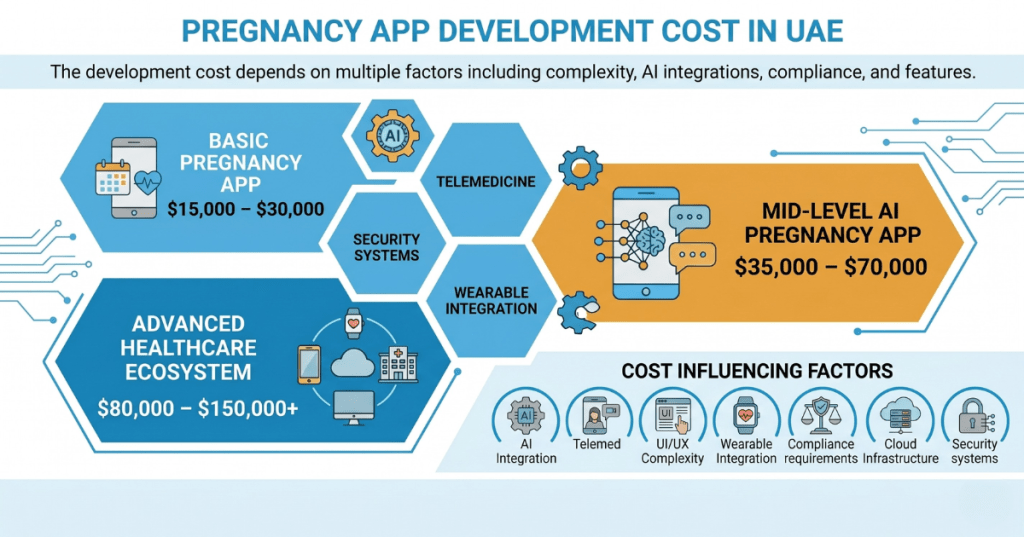
The development cost depends on multiple factors including complexity, AI integrations, compliance requirements, and feature scope.
Estimated Development Cost
| App Type | Estimated Cost |
|---|---|
| Basic Pregnancy App | $15,000 – $30,000 |
| Mid-Level AI Pregnancy App | $35,000 – $70,000 |
| Advanced Healthcare Ecosystem | $80,000 – $150,000+ |
Cost Influencing Factors
- AI integration
- Telemedicine functionality
- UI/UX complexity
- Wearable integrations
- Compliance requirements
- Cloud infrastructure
- Security systems
Healthcare startups increasingly partner with a trusted healthcare app development company in UAE to reduce technical risks and improve scalability.
Challenges in Developing Smart Pregnancy Apps
Building modern smart pregnancy apps UAE is not just a technical task—it is a highly regulated, sensitive, and trust-driven healthcare domain. Since these applications deal with maternal health data, AI predictions, telemedicine services, and real-time monitoring, developers and healthcare companies face multiple challenges that must be handled carefully to ensure safety, compliance, and long-term reliability.
Healthcare Compliance Complexity
One of the biggest challenges in pregnancy app development UAE is meeting strict healthcare regulations and compliance standards. Healthcare applications must follow legal frameworks related to patient safety, medical data handling, and digital healthcare services.
Unlike regular mobile apps, pregnancy apps often integrate with medical systems, hospital networks, and telemedicine platforms. This makes compliance more complex because every feature must align with healthcare laws and industry standards.
Developers must ensure that every component—from data storage to doctor consultations—meets regulatory expectations. Any gap in compliance can lead to legal risks, data issues, or reduced user trust.
Data Privacy and Cybersecurity Concerns
Pregnancy apps handle extremely sensitive personal and medical data, including health records, pregnancy progress, symptoms, and sometimes emotional and mental health information. This makes data protection one of the most critical challenges.
To build secure women’s healthcare apps UAE, companies must implement strong cybersecurity systems such as encryption, secure authentication, and protected cloud infrastructure.
The challenge is not only protecting data from external threats but also ensuring safe internal data handling, restricted access controls, and secure API integrations with third-party healthcare systems.
Without strong security, users may lose trust, which directly impacts app adoption and long-term success.
Building and Maintaining User Trust
In healthcare, trust is everything. Users expect accurate information, reliable health insights, and safe medical guidance. If a pregnancy app provides incorrect or misleading suggestions, it can seriously impact user confidence.
This is why AI pregnancy apps UAE must be designed with high accuracy, medically validated data sources, and expert-reviewed healthcare content.
Building trust also depends on transparency—users need to understand how their data is used, how AI recommendations are generated, and when professional medical consultation is necessary.
Trust-building is a continuous process that requires consistent performance, reliable updates, and strong healthcare credibility.
AI Accuracy and Medical Safety Requirements
Artificial Intelligence plays a major role in modern pregnancy apps, but it also introduces one of the most sensitive challenges: accuracy.
AI models used in healthcare must deliver highly precise predictions and recommendations because even small errors can lead to serious consequences in maternal care.
For example, predictive systems that analyze gestational diabetes risk or fetal health patterns must be trained on high-quality, medically validated datasets. Continuous monitoring, testing, and improvement are essential to ensure safety.
This is why healthcare startups working on digital pregnancy healthcare UAE solutions often collaborate with medical experts and AI specialists to validate system outputs before deployment.
Integration With Healthcare Systems and Devices
Another major challenge is integrating pregnancy apps with external healthcare systems such as hospitals, clinics, laboratories, and wearable devices.
Modern pregnancy applications are expected to support real-time data exchange with:
- Hospital management systems
- Electronic health records (EHR)
- Telemedicine platforms
- Smart wearable devices
- Diagnostic labs and reports
Each system has its own technical standards, APIs, and security protocols. Ensuring smooth integration across all these systems requires advanced engineering and careful system architecture planning.
In addition, maintaining real-time synchronization without data loss or delays adds another layer of complexity, especially in large-scale healthcare environments.
Future of Smart Pregnancy Apps in UAE
The future of maternal healthcare in the UAE is moving rapidly toward a fully digital, AI-powered, and patient-centric ecosystem. With continuous investments in healthcare innovation and strong support for digital transformation, smart pregnancy apps UAE are expected to become even more advanced, intelligent, and widely adopted.
Healthcare systems are shifting from reactive treatment models to proactive and predictive care models, where technology plays a central role in monitoring, diagnosing, and guiding patient health.
AI-Powered Predictive Diagnostics
One of the most promising future trends is AI-driven predictive diagnostics. Instead of only tracking pregnancy progress, future systems will be able to predict potential complications even before symptoms appear.
These systems will use advanced machine learning models to analyze large datasets and identify early warning signs, helping doctors take preventive action at the right time.
Voice-Enabled Healthcare Assistants
Voice-based AI assistants are expected to become a standard feature in next-generation women’s healthcare apps UAE. These assistants will allow users to interact with healthcare apps hands-free, making it easier to access information, schedule appointments, or get health guidance instantly.
This will improve accessibility, especially for users who prefer conversational interaction over manual navigation.
IoT-Enabled Maternal Health Monitoring
The Internet of Things (IoT) will further enhance pregnancy care by connecting smart devices such as wearable monitors, health sensors, and home diagnostic tools directly with mobile applications.
This will enable continuous real-time health monitoring and improve early detection of health risks during pregnancy.
Blockchain-Based Healthcare Records
Blockchain technology is expected to improve data security and transparency in healthcare systems. Future pregnancy apps may use blockchain to securely store and manage patient records, ensuring data integrity and preventing unauthorized modifications.
This will significantly enhance trust and security in digital pregnancy healthcare UAE ecosystems.
Augmented Reality (AR) in Healthcare Education
Augmented Reality will transform how users understand pregnancy-related information. AR-based learning tools will allow users to visualize fetal development, body changes, and medical procedures in an interactive and immersive way.
This will improve healthcare education and patient awareness.
Smart Wearable Pregnancy Ecosystems
The future will also see fully integrated earable ecosystems where pregnancy apps continuously collect health data from multiple smart devices and provide real-time insights.
These ecosystems will create a fully connected healthcare experience that supports both patients and doctors in delivering better maternal care.
Why SISGAIN Is Important for Smart Pregnancy App Development
Choosing the right technology partner is critical for building successful smart pregnancy apps UAE. SISGAIN brings strong healthcare industry expertise, understanding clinical workflows, patient engagement, and compliance requirements. The company specializes in advanced AI integration, predictive analytics, and intelligent healthcare ecosystems that enhance pregnancy app performance. With deep UAE market knowledge, SISGAIN ensures regulatory alignment and digital healthcare readiness. It also provides HIPAA-grade security, scalable architecture, and end-to-end development support from design to deployment, helping businesses build reliable women’s healthcare solutions.
Conclusion
Smart pregnancy applications are revolutionizing maternal healthcare experiences across the UAE. These digital platforms are empowering women with real-time healthcare access, AI-powered insights, personalized wellness support, and remote healthcare services.
As healthcare digitalization continues accelerating, demand for smart pregnancy apps UAE and intelligent maternity platforms will continue growing rapidly. Businesses investing in pregnancy app development UAE now have a major opportunity to shape the future of women’s healthcare through innovation, AI, and patient-centric digital experiences.
From telemedicine and predictive analytics to wearable integrations and personalized healthcare guidance, the future of digital pregnancy healthcare UAE is becoming smarter, safer, and more connected than ever before.
Frequently Ask Questions ?
1. What are smart pregnancy apps?
Smart pregnancy apps are AI-powered healthcare platforms that help women track pregnancy, monitor health, get personalized insights, and access telemedicine services for safer and smarter maternity care.
2. How do AI pregnancy apps work?
AI pregnancy apps analyze user data like symptoms, lifestyle, and health records to provide personalized recommendations, risk alerts, and wellness tips for better pregnancy management and care.
3. What is the cost of developing a pregnancy app in UAE?
The cost depends on features, AI integration, and complexity. A basic app may start from $15,000, while advanced AI-powered pregnancy apps can exceed $80,000 or more.
4. Are pregnancy apps safe for medical use?
Yes, if developed with proper healthcare compliance, encryption, and medical-grade security standards. Reliable apps ensure data privacy and safe, accurate health insights for users.
5. Why are pregnancy apps popular in the UAE?
They are popular due to high smartphone usage, demand for personalized healthcare, telemedicine growth, and UAE’s strong digital healthcare transformation initiatives.
6. What features make a pregnancy app successful?
Key features include AI health tracking, telemedicine, wearable integration, secure records, emergency support, nutrition tracking, and personalized pregnancy guidance.


Leave a Reply